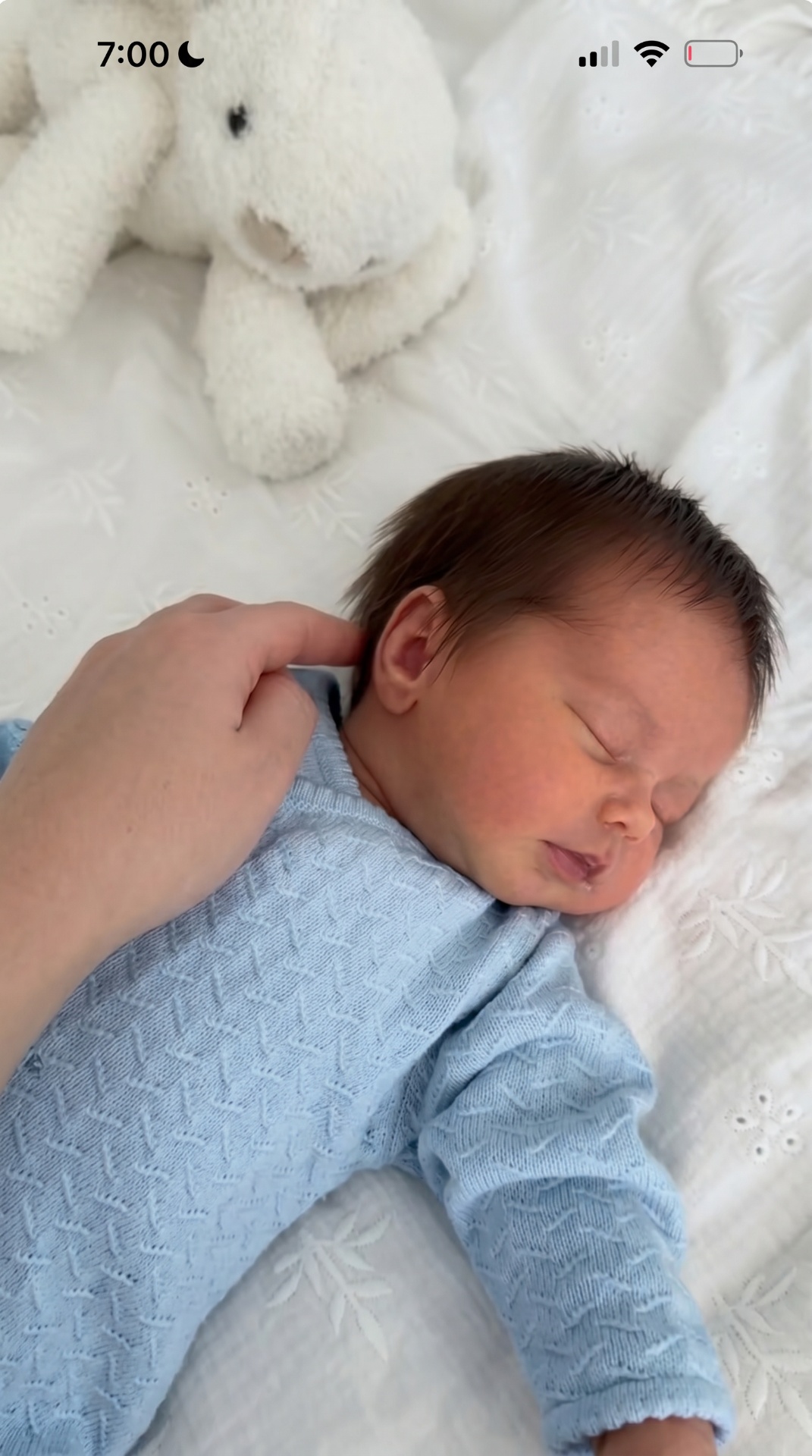
Newborn Wake Windows: How Long Should a Newborn Stay Awake?

Newborn wake windows are the shortest stretch of awake time your baby will ever have -- often just 35 to 60 minutes in the first weeks. Get the timing right and your newborn settles easily. Wait too long and an overtired newborn fights sleep, takes tiny naps, and is hard to console.
A wake window is how long your baby can comfortably stay awake -- feed, diaper, and a little play included -- before needing to sleep again. For the full age-by-age picture, see wake windows by age, and for a full sample day, the newborn sleep schedule.
Newborn wake windows by week
These are typical ranges, not rules. Remember the wake window includes the feed and the diaper change.
| Age | Wake window | Naps per day |
|---|---|---|
| 0-2 weeks | 30-45 min | 5-6+ |
| 3-4 weeks | 35-50 min | 5-6 |
| 5-6 weeks | 40-60 min | 4-6 |
| 7-8 weeks | 45-75 min | 4-5 |
| 9-12 weeks | 60-90 min | 4-5 |
Most of a newborn's awake time is taken up by feeding. Many newborns are ready to sleep again only 40-50 minutes after waking.
What to do during a newborn wake window
Keep it simple. The order that works for most families:
- Feed first, when baby wakes.
- Change the diaper to buy a little awake time.
- A few minutes of calm play or tummy time if baby is content.
- Start winding down at the first sleepy cue.
Spotting the right window
- Sleepy cues (settle now): staring off, red eyebrows, slowing down, looking away, first yawns.
- Overtired (window too long): arching back, frantic crying, clenched fists, very hard to settle.
With newborns it is better to err slightly early than late. An overtired newborn is much harder to put down. If your baby melts down every evening, that is often the witching hour, not hunger.
Common newborn wake window problems
- Falls asleep feeding, then wakes when put down: normal this young. Try contact naps and review safe sleep.
- Short 30-minute naps: the window was likely a touch too long. Shorten by 10 minutes.
- Fights every nap by evening: the last window of the day is usually too long -- aim for the short end.
This is exactly what Baby Signal is built for. Instead of guessing whether a short nap means too much or too little awake time, you describe what happened and get one clear adjustment for your baby's age. Get Baby Signal and stop watching the clock.
The takeaway
Newborn wake windows are tiny -- 35 to 90 minutes, including the feed. Follow sleepy cues over the clock, err slightly early, and protect safe sleep. As windows lengthen, move on to the 3 month wake windows and the baby sleep schedule by age guide.
Frequently asked questions
How long should a newborn stay awake?
Roughly 35-60 minutes in the first few weeks, stretching to 60-90 minutes by 3 months. That window includes the feed and diaper change, so true play time is short.
How many wake windows does a newborn have?
Most newborns cycle through 5-6 or more short wake windows in 24 hours, because they feed every 2-3 hours and sleep in short chunks.
What should I do during a newborn wake window?
Feed first, then change the diaper, allow a few minutes of calm play or tummy time if baby is content, and start winding down at the first sleepy cue.
Why does my newborn fight sleep?
Usually the wake window was a little too long and your baby is overtired. Try settling 5-10 minutes earlier and watch for the first sleepy cues instead of the clock.
A note on this guide: Baby Signal’s articles are written to be practical and reassuring, drawing on guidance from recognized health authorities. This is general information, not medical advice — for urgent or personal health concerns, always contact your pediatrician or emergency services.
Understand your baby — not just track them.
Baby Signal turns what you're seeing into one clear next step, shaped by your baby's age, history, and what you've already tried.