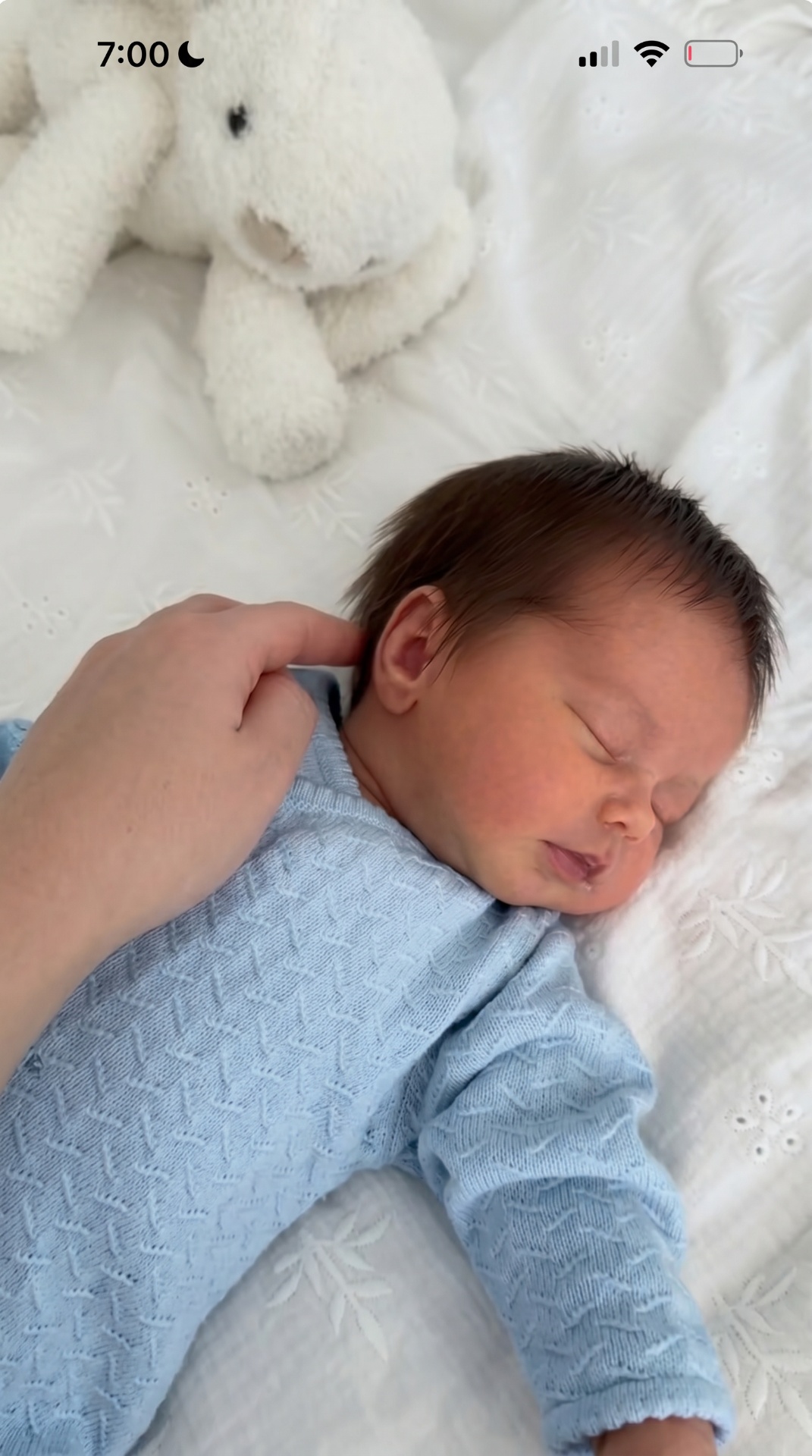
Newborn Sleep Schedule (0-12 Weeks): Sample Routines & Wake Windows

Newborns don't really have a "schedule" -- they have a rhythm of eat, short wake window, sleep, repeated around the clock. Trying to force a rigid clock-based routine in the first weeks usually backfires. What works is following wake windows and feeding cues while gently nudging toward day-night rhythm.
If you're deciding how structured to be this early, read schedule vs. routine first, and bookmark the full baby sleep schedule by age guide for what comes next.
Newborn sleep at a glance
| Measure | 0-12 weeks |
|---|---|
| Total sleep / 24h | 14-17 hours |
| Wake window | 35-60 minutes |
| Naps per day | 4-6+ (often unpredictable) |
| Longest night stretch | 2-4 hours (building toward 4-6) |
| Feeds | Every 2-3 hours |
Newborn sleep is broken into short chunks because their tummies are tiny and they cycle quickly between sleep stages. This is normal and developmentally necessary -- it is not a problem to fix.
Sample newborn day (flexible, not fixed)
This is a pattern, not a timetable. Times shift every day.
| Time | What's happening |
|---|---|
| 7:00 | Wake + feed |
| 7:45 | Down for nap (after ~45 min awake) |
| 9:00 | Wake + feed |
| ~10:00 | Nap |
| (repeat) | Eat -> short wake window -> sleep, all day |
| 7:00-9:00 pm | Cluster feeding + bedtime |
| Overnight | Wake to feed every 2-4 hours |
The single most useful habit: start winding down at the first sleepy cue, before the overtired stage. For newborns the awake time is so short that many babies are ready to sleep again only 40-50 minutes after waking -- and that window includes the feed and diaper change.
Wake windows are everything right now
A wake window is how long your baby can comfortably stay awake before becoming overtired. For newborns it's tiny:
- 0-6 weeks: 35-60 minutes
- 7-12 weeks: 60-90 minutes
Watch for sleepy cues -- staring off, red eyebrows, slowing down, looking away, first yawns. An overtired newborn is much harder to settle, so erring slightly early beats waiting too long.
Building day-night rhythm
You can't "sleep train" a newborn, but you can lay the groundwork:
- Days: keep it bright, feed actively, allow normal household noise.
- Nights: keep it dark, quiet, and boring -- feed and change with minimal stimulation, then back to sleep.
- Anchor the morning: start the day around the same time to set the body clock.
Safe sleep comes first
Every nap and every night: baby on their back, on a firm flat surface, with nothing else in the sleep space. Review the safe sleep basics -- this matters more than any schedule.
Common newborn sleep worries
- Only sleeps on me: extremely common. See contact naps -- they're safe when you're awake and fine to lean on early.
- Days and nights mixed up: expose to daylight in the morning and keep nights dark; this usually self-corrects by 6-8 weeks.
- Fussy every evening: the witching hour peaks around 4-6 weeks and fades.
This is exactly what Baby Signal is built for. Instead of guessing whether a short nap means the wake window was too long or too short, you describe what happened -- "down at 9:15, took 25 minutes to settle, woke after 35" -- and get one clear adjustment shaped by your baby's age and history. Get Baby Signal and stop second-guessing the clock.
When does a real schedule start?
Most babies start showing a predictable pattern around 3-4 months as wake windows lengthen and naps consolidate. Until then, follow the rhythm -- not the clock. Next up: the 2-month and 3-month schedules.
The takeaway
A newborn sleep schedule isn't a fixed timetable -- it's a flexible loop of feed, short wake window, and sleep. Follow tired cues, keep wake windows to 35-90 minutes, protect safe sleep, and gently build day-night rhythm. Structure comes later.
Frequently asked questions
How many hours should a newborn sleep?
Most newborns sleep 14-17 hours in a 24-hour period, broken into short stretches of 2-4 hours around the clock. Both day and night sleep count toward the total.
Can you put a newborn on a schedule?
Not a strict clock-based one. In the first 12 weeks, follow wake windows (35-90 minutes) and feeding cues instead. A predictable schedule usually emerges around 3-4 months.
What is a newborn wake window?
It's how long your baby can comfortably stay awake before getting overtired -- about 35-60 minutes at 0-6 weeks and 60-90 minutes at 7-12 weeks. The feed and diaper change happen inside that window.
Why does my newborn only sleep when held?
It's developmentally normal -- being held mimics the womb. Contact naps are safe when you're awake and supervising. Many babies tolerate the crib better as they mature and wake windows lengthen.
A note on this guide: Baby Signal’s articles are written to be practical and reassuring, drawing on guidance from recognized health authorities. This is general information, not medical advice — for urgent or personal health concerns, always contact your pediatrician or emergency services.
Understand your baby — not just track them.
Baby Signal turns what you're seeing into one clear next step, shaped by your baby's age, history, and what you've already tried.