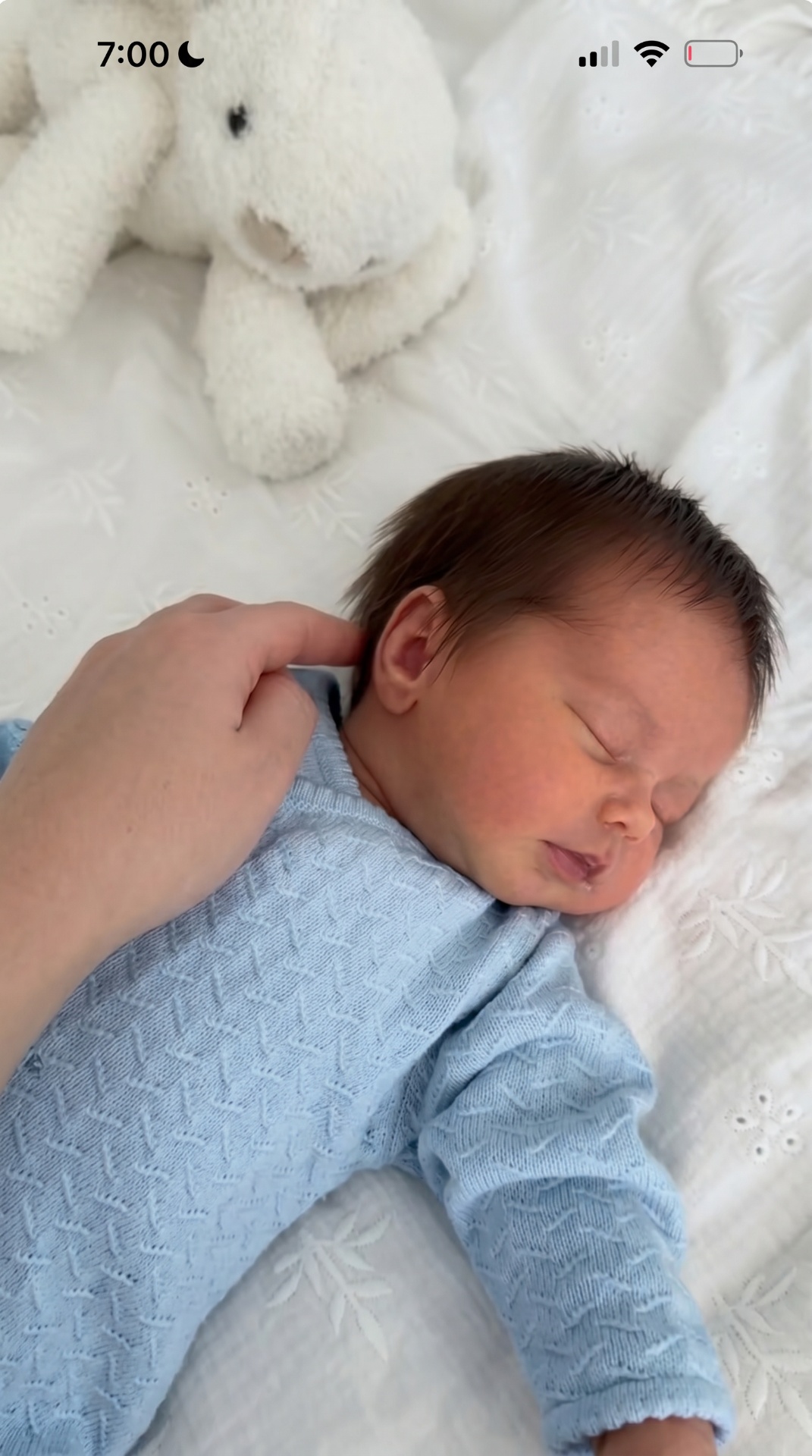
3 Month Old Sleep Schedule: Wake Windows, Naps & Sample Day

Three months is a turning point. Wake windows lengthen to 75-120 minutes, naps start consolidating toward 3-4 a day, and a genuinely predictable routine becomes possible for the first time. Many parents feel the fog lift a little here.
See the full baby sleep schedule by age hub, and if you're coming from the 2-month schedule you'll notice longer awake stretches.
3-month-old sleep at a glance
| Measure | 3 months |
|---|---|
| Total sleep / 24h | 14-16 hours |
| Wake window | 75-120 minutes |
| Naps per day | 3-4 |
| Longest night stretch | 5-8 hours |
| Day sleep | 4-5 hours |
Sample 3-month-old day
| Time | What's happening |
|---|---|
| 7:00 | Wake + feed |
| 8:30 | Nap 1 |
| 10:00 | Wake + feed |
| 11:45 | Nap 2 |
| 1:15 | Wake + feed |
| 3:00 | Nap 3 |
| 4:30 | Wake + feed |
| 5:30 | Short catnap (optional) |
| 6:30-7:00 | Bedtime routine + down |
| Overnight | 1-2 feeds |
Use wake windows as your guide and adjust by 10-15 minutes based on how your baby settles.
Naps at 3 months
You're moving from 4-5 newborn catnaps toward 3-4 more organized naps. Some will still be short -- a fourth short catnap late afternoon is common to bridge to bedtime. Protecting the first two naps tends to set up the whole day.
Night sleep at 3 months
Night sleep is consolidating. Many babies give a 5-8 hour first stretch. Support it with:
- A consistent, calming bedtime routine.
- A dark room and white noise.
- Putting baby down drowsy but awake when you can, so they practice falling asleep.
Heads-up: the 4-month regression is coming
Around 3.5-4 months, sleep cycles mature and many babies suddenly wake more -- the 4-month sleep regression. It's a permanent change in how your baby sleeps, not a step backward. Building independent sleep skills now makes it easier.
Safe sleep at 3 months
Back to sleep, empty crib. Crucially: stop swaddling at the first sign of rolling, which can start around now. Review safe sleep basics.
This is exactly what Baby Signal is built for. Instead of guessing whether a short nap means the wake window was too long or too short, you describe what happened -- "down at 9:15, took 25 minutes to settle, woke after 35" -- and get one clear adjustment shaped by your baby's age and history. Get Baby Signal and stop second-guessing the clock.
The takeaway
A 3-month-old sleep schedule finally feels predictable: 75-120 minute wake windows, 3-4 naps, and a longer night stretch. Anchor the morning, protect the first two naps, and start practicing drowsy-but-awake before the 4-month regression arrives.
Frequently asked questions
How long should a 3 month old be awake between naps?
About 75-120 minutes. The first wake window of the day is shortest (closer to 75 minutes) and the last before bed is longest (up to about 2 hours).
How many naps should a 3 month old take?
Usually 3-4 naps. You're transitioning from frequent newborn catnaps to a more organized 3-4 nap rhythm, often with a short late-afternoon catnap.
How much night sleep does a 3 month old get?
Many sleep 10-11 hours overnight with 1-2 feeds, and some give a first stretch of 5-8 hours. Totals vary, so judge by your baby's mood and the 24-hour total.
Why is my 3 month old suddenly waking more?
It may be the early 4-month sleep regression, when sleep cycles mature. It's a normal, permanent change. Practicing drowsy-but-awake and a consistent routine helps your baby resettle.
A note on this guide: Baby Signal’s articles are written to be practical and reassuring, drawing on guidance from recognized health authorities. This is general information, not medical advice — for urgent or personal health concerns, always contact your pediatrician or emergency services.
Understand your baby — not just track them.
Baby Signal turns what you're seeing into one clear next step, shaped by your baby's age, history, and what you've already tried.