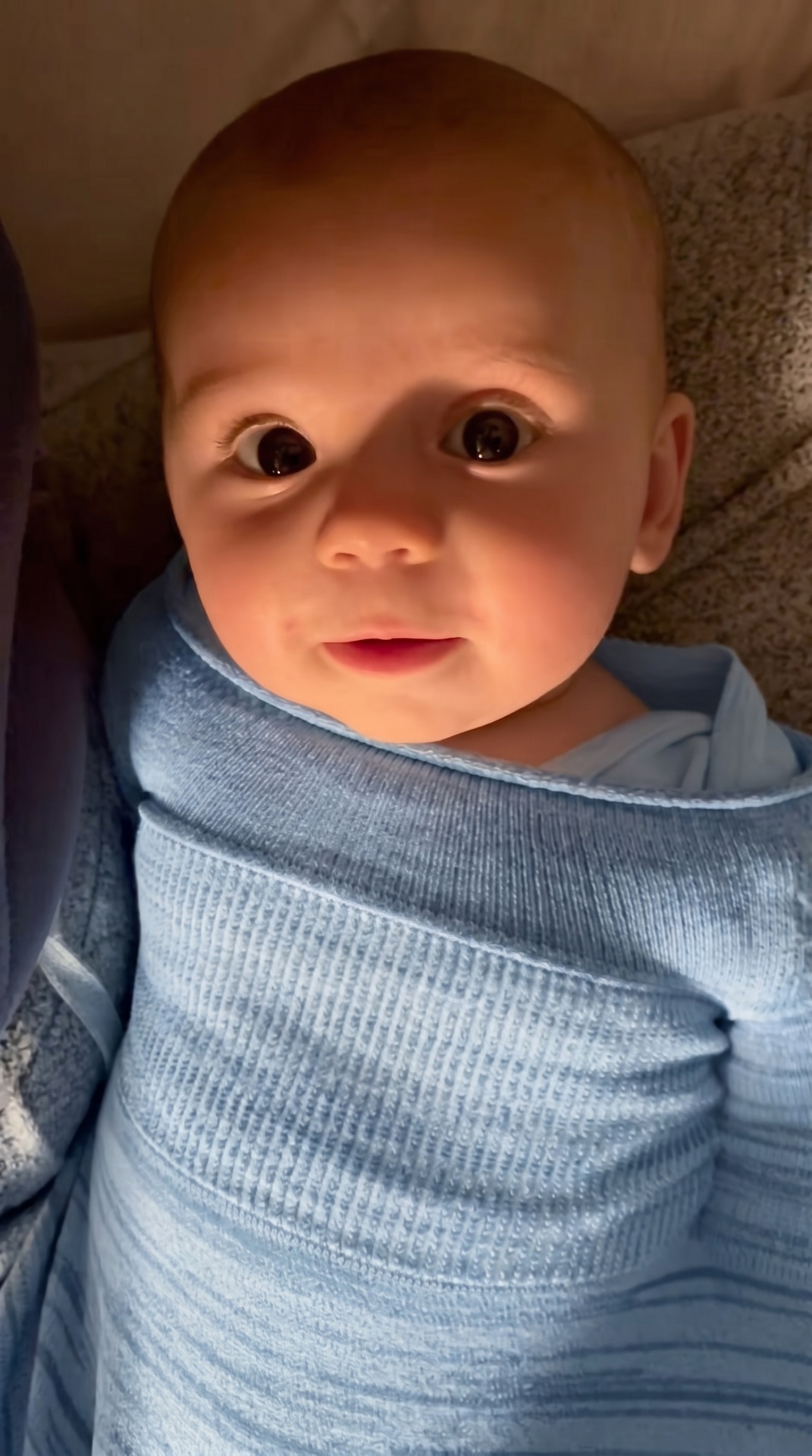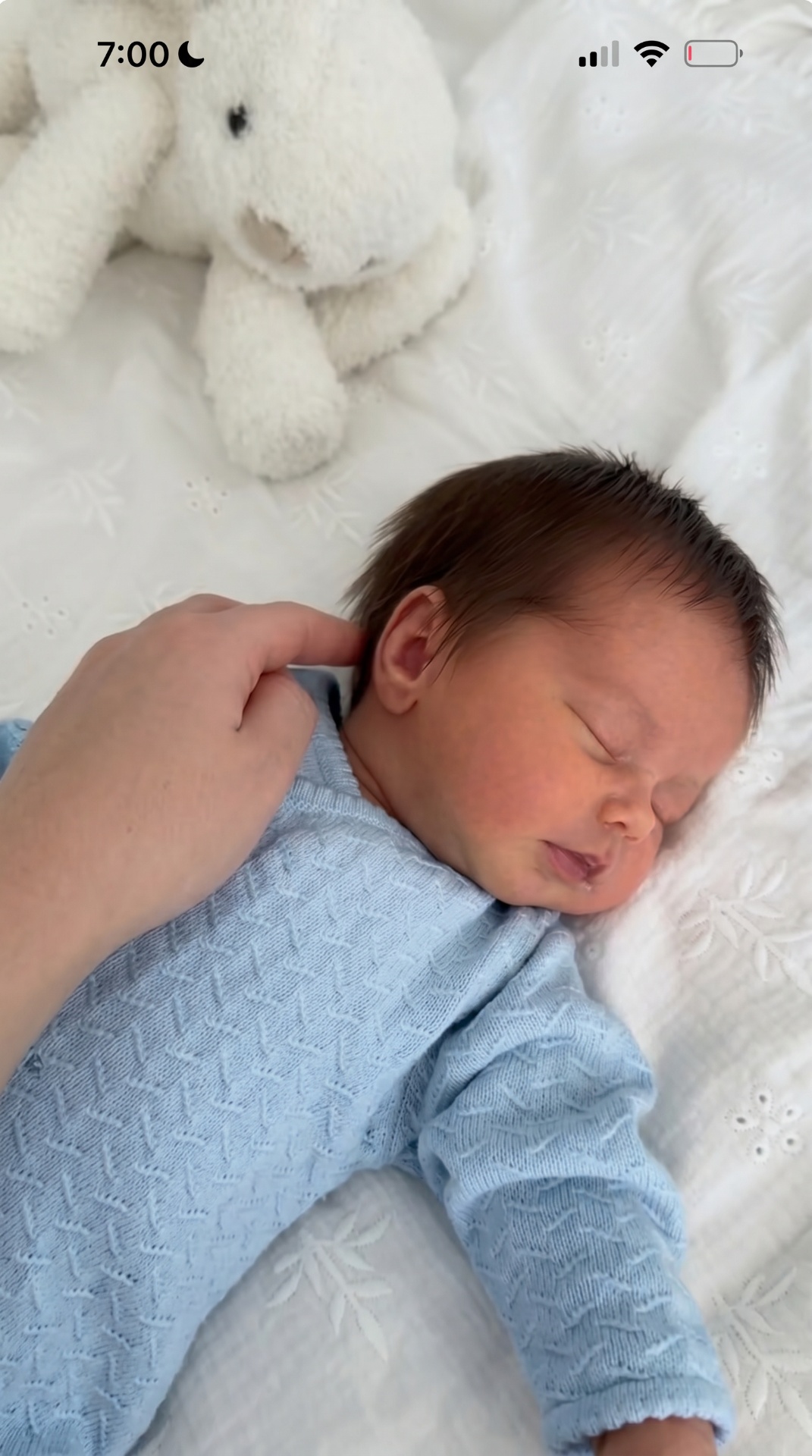
7, 8 & 9 Month Old Sleep Schedule: 2 Naps, Wake Windows & Sample Day
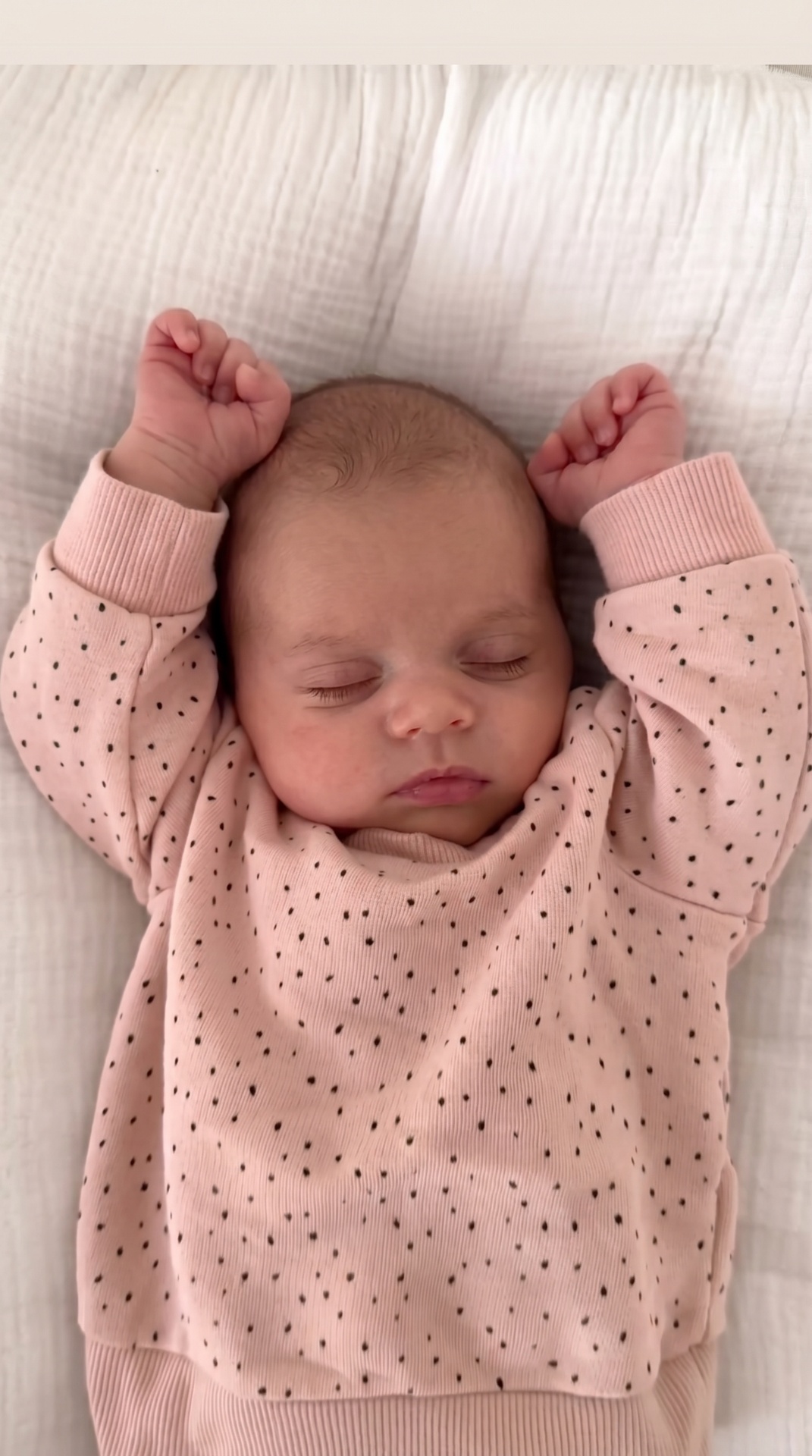
From 7 to 9 months, most babies settle into a clean 2-nap rhythm with wake windows of 2.5-3 hours. It's usually a more predictable, easier stretch -- with one common bump: the 8-9 month regression driven by big developmental leaps and separation anxiety.
Part of the baby sleep schedule by age series. Coming from 3 naps? See the 6-month schedule.
7-9 month sleep at a glance
| Measure | 7-9 months |
|---|---|
| Total sleep / 24h | 12-15 hours |
| Wake window | 2.5-3.25 hours |
| Naps per day | 2 |
| Longest night stretch | 9-12 hours |
| Day sleep | 2-3 hours |
Sample 7-9 month day (2 naps)
| Time | What's happening |
|---|---|
| 7:00 | Wake + milk |
| 8:00 | Breakfast (solids) |
| 9:30 | Nap 1 |
| 11:00 | Wake + milk |
| 12:00 | Lunch (solids) |
| 2:00 | Nap 2 |
| 3:30 | Wake + milk |
| 5:30 | Dinner (solids) |
| 6:30-7:00 | Bedtime routine + down |
Aim for wake windows around 2.5-3 hours, with the last window before bed the longest. Try to keep the two naps reasonably even and protect at least 1.5-2 hours of total day sleep.
The 8-9 month regression
Around 8-9 months, crawling, pulling up, babbling, and separation anxiety often collide and disrupt sleep. Babies may practice new skills in the crib or wake looking for you. Ride it out by:
- Keeping the schedule and bedtime routine consistent.
- Giving practice time for new skills during the day.
- Offering brief, boring reassurance overnight rather than long interventions.
It typically passes in 1-2 weeks if you hold the routine steady.
Naps at 7-9 months
Two naps is the standard. If the second nap fights or bedtime drifts late, check that the morning nap isn't too long (cap it if it steals from nap 2). A too-short or too-long day can both cause early-morning waking.
Night sleep at 7-9 months
Many babies do 11-12 hours overnight now. Night feeds are often dropping; talk to your pediatrician about whether your baby still needs one. Keep the room dark and cool and resist starting new sleep crutches during the regression.
Safe sleep at 7-9 months
Back to start, sleep sack, empty crib, mattress on its lowest setting. Review safe sleep basics.
This is exactly what Baby Signal is built for. Instead of guessing whether a short nap means the wake window was too long or too short, you describe what happened -- "down at 9:15, took 25 minutes to settle, woke after 35" -- and get one clear adjustment shaped by your baby's age and history. Get Baby Signal and stop second-guessing the clock.
The takeaway
A 7-9 month old sleep schedule runs on 2 naps and 2.5-3 hour wake windows, with longer, more settled nights. Expect a short 8-9 month regression from big developmental leaps -- hold the routine steady and it passes. Next: the 10-12 month schedule.
Frequently asked questions
How long should a 7-9 month old be awake between naps?
About 2.5 to 3.25 hours, with the longest window right before bedtime. Adjust by 15 minutes based on tired cues and how quickly your baby settles.
How many naps does an 8 month old need?
Two naps a day, ideally totaling about 2-3 hours. If the morning nap runs long, cap it so it doesn't steal from the afternoon nap or push bedtime late.
What causes the 8-9 month sleep regression?
Big developmental leaps -- crawling, pulling up, babbling -- plus separation anxiety. Babies practice skills or wake looking for you. Keeping the routine consistent usually resolves it within 1-2 weeks.
Should a 9 month old still feed at night?
Many no longer need a night feed, but some still do. Check with your pediatrician before night weaning, and keep any night feeds dark and brief.
A note on this guide: Baby Signal’s articles are written to be practical and reassuring, drawing on guidance from recognized health authorities. This is general information, not medical advice — for urgent or personal health concerns, always contact your pediatrician or emergency services.
Understand your baby — not just track them.
Baby Signal turns what you're seeing into one clear next step, shaped by your baby's age, history, and what you've already tried.